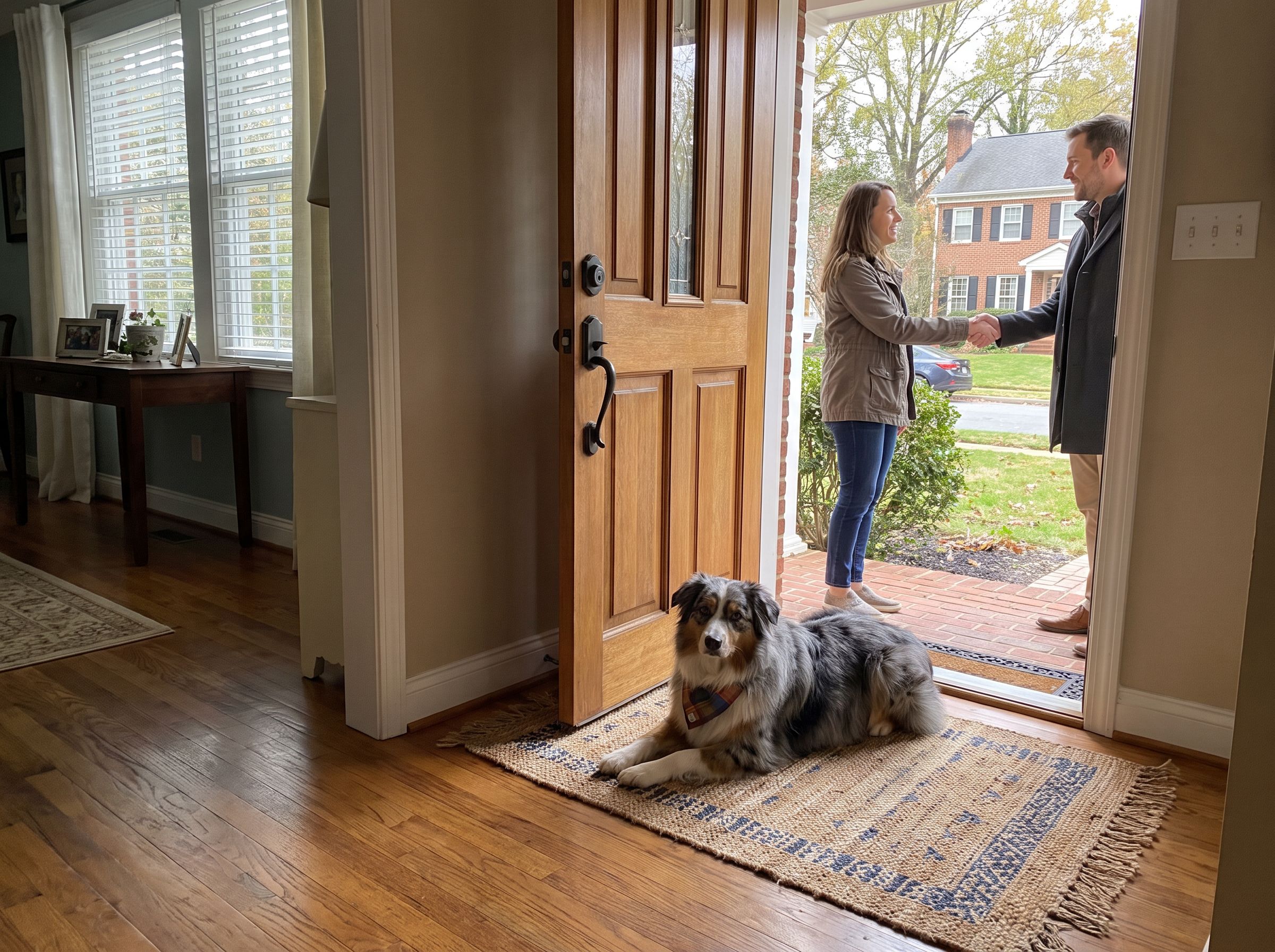
Separation Stress Training
Help for dogs who struggle when left alone: destruction, barking, howling, and escape attempts.
Why Some Dogs Struggle When Left Alone
Some dogs panic when left alone. Others are simply bored, under-exercised, or have never learned how to settle without their people. The behaviors can look similar: chewing doors, barking for hours, accidents in the house, or trying to break out of crates.
Figuring out which is which is the first step, because the plan for a bored dog is very different from the plan for a truly panicked one.
Signs You Need Help
- Destruction near doors or windows
- Barking, whining, or howling after you leave
- Accidents only when home alone
- Pacing, drooling, or panting as you get ready to leave
- Escape attempts from crates or rooms
How We Fix It
We help you build independence in small, manageable steps: a calm place to settle, a structured routine, crate comfort, and practice leaving and returning without drama. We also look at exercise, enrichment, and the whole day’s structure.
For severe cases, we may recommend working alongside your veterinarian, since some dogs benefit from medical support while they learn.
Recommended Programs
Private Lessons
One-on-one sessions built around your home, your routine, and the problems that matter most to you.
Board & Train
Immersive training while your dog stays with us, then a full hands-on handoff so the results carry over at home.
Day Training
Drop your dog off once a week for a full day of professional training, then learn exactly what they learned.
Frequently Asked Questions
Will getting a second dog help?
Sometimes, but often not. Many dogs with separation stress are attached to their people, not just company. Train the first dog first.
Should I stop crating my dog?
Not necessarily. Many dogs find a crate calming once it’s introduced properly. We’ll assess what’s right for your dog.
How long does it take?
It varies widely. Mild cases can improve in a few weeks; severe cases take longer and may need veterinary support.
Other Behavior Problems
Leash Pulling · Jumping on People · Excessive Barking · Leash Reactivity · Aggression · Fear & Anxiety · Not Coming When Called · Door Dashing · Puppy Biting & Nipping
Ready for a Better-Behaved Dog?
Tell us what’s going on with your dog. We’ll set up a free, no-pressure evaluation, show you what’s possible, and recommend the program that fits your dog and your schedule.

